
Home Alone: Part 1
When a puppy arrives in our home, there are so many important things we need to teach them in their new surroundings. From house-training to making sure they are safe and cannot hurt themselves, damage objects or harm other living beings in our home. But there is one more important thing we must not forget. We need to teach our puppy how to keep themselves occupied when home alone — and that being alone can actually be a pleasant experience.
Although we might think it is wonderful to spend every minute of the first days and weeks with our puppy, we are not really doing them a favour by doing so. Sooner or later, we will have to leave them at home alone sometimes. And because dogs are social beings who want company, this can be very stressful for them. However, with some time and effort, we can gradually get them used to staying calm and content when they are home alone.
A safe space
It is very likely that your puppy has never been alone before. It is not fair to expect them to suddenly cope with your absence of more than eight hours while you are at work.
Start by occasionally leaving them on their own even while you are still in the house.
For example, in their own area separated by a safety gate, or in a crate. If you gradually and kindly introduce your dog to this area or crate, they will come to see it as their own safe, peaceful refuge — a little den — rather than somewhere they are sent as punishment.
Let your puppy have their meals in this area or crate.
You can also give them treats, dried dog chews such as bully sticks, ears or tripe, or a stuffed Kong. If the space is large enough, you can play together there too. Give them toys that are only available in that space. Once they happily go into the area or crate of their own accord, you can begin teaching them to stay there alone.
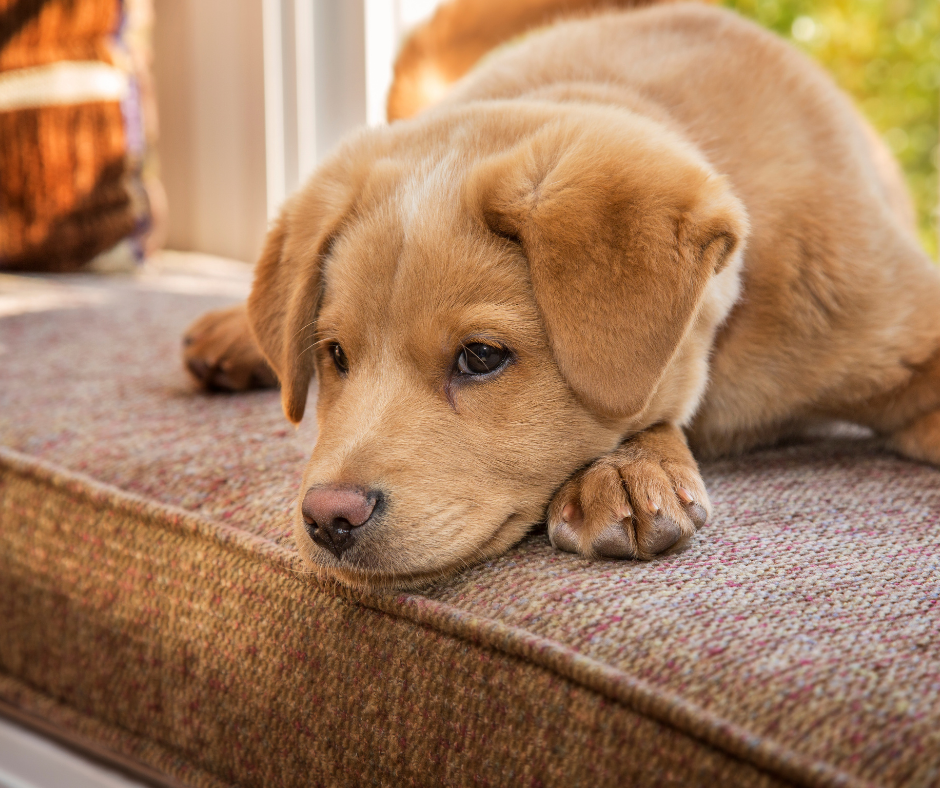
Teaching your puppy to be home alone
1. Begin by putting your dog in their enclosed area or crate with a dog chew (dried ears, tripe, a bully stick — experiment to find out what they like best) or a stuffed Kong.
2. Leave the room without making a big fuss.
3. Come back after a few moments (the first time, this might be after just a few seconds), praise your puppy and give them another treat.
Repeat this process, gradually increasing the time before you return. At first, even one or two minutes may be too much for your puppy. After a few days, though, you will notice that they can stay on their own for longer. Just do not rush things — it really is important to proceed gradually.
As you increase the time interval, you can occasionally return to check on your puppy.
If they are calm, relaxed and quiet, praise them gently and give them a treat before leaving again. When you are just checking on them, try not to get them too excited or worked up.
If your puppy starts whining or barking in their space, you have probably moved too quickly.
They may not yet have associated your departure with something pleasant (food), or you may have left them alone for too long. The original advice is not to let them out in direct response to whining or barking, so they do not learn that these behaviours open the door. Most importantly, shorten the next practice session and work at a pace your puppy can manage. If your puppy is genuinely distressed, attend to their welfare rather than allowing distress to escalate.
This area or crate is primarily intended as a temporary solution.
Its purpose is to help your puppy learn to remain calm when home alone. Once they are confident and relaxed on their own, can go longer without needing to pee or poo, and are reliably house-trained, you can gradually give them access to more of the home while you are out. It is still important that the space is safe for your dog and that they cannot destroy things that matter to you. As you become able to trust your puppy more, you can give them more freedom. For some puppies this happens sooner; for others it can take quite a long time.
A crate is only for short periods of absence!
The article gives the following daytime guidelines:
8–10 weeks old: up to 1 hour
11–12 weeks old: up to 2 hours
13–16 weeks old: up to 3 hours
Over 4 months old: up to 4 hours
For longer absences during the day, a crate is not suitable. Instead, use a sectioned-off area with a sufficiently high, sturdy safety gate or baby gate.
Creating pleasant associations
Leaving a puppy at home alone without anything to keep them occupied is a recipe for trouble.
Not sure what a Kong is? Look for one in a pet shop.
Ideally, leave your puppy with a toy such as a Kong. Fill it with soft food or a spread, then press some kibble or dog biscuits inside. You can even freeze it, so your dog will need quite a while to work all the food out. Their teeth will be kept busy too.
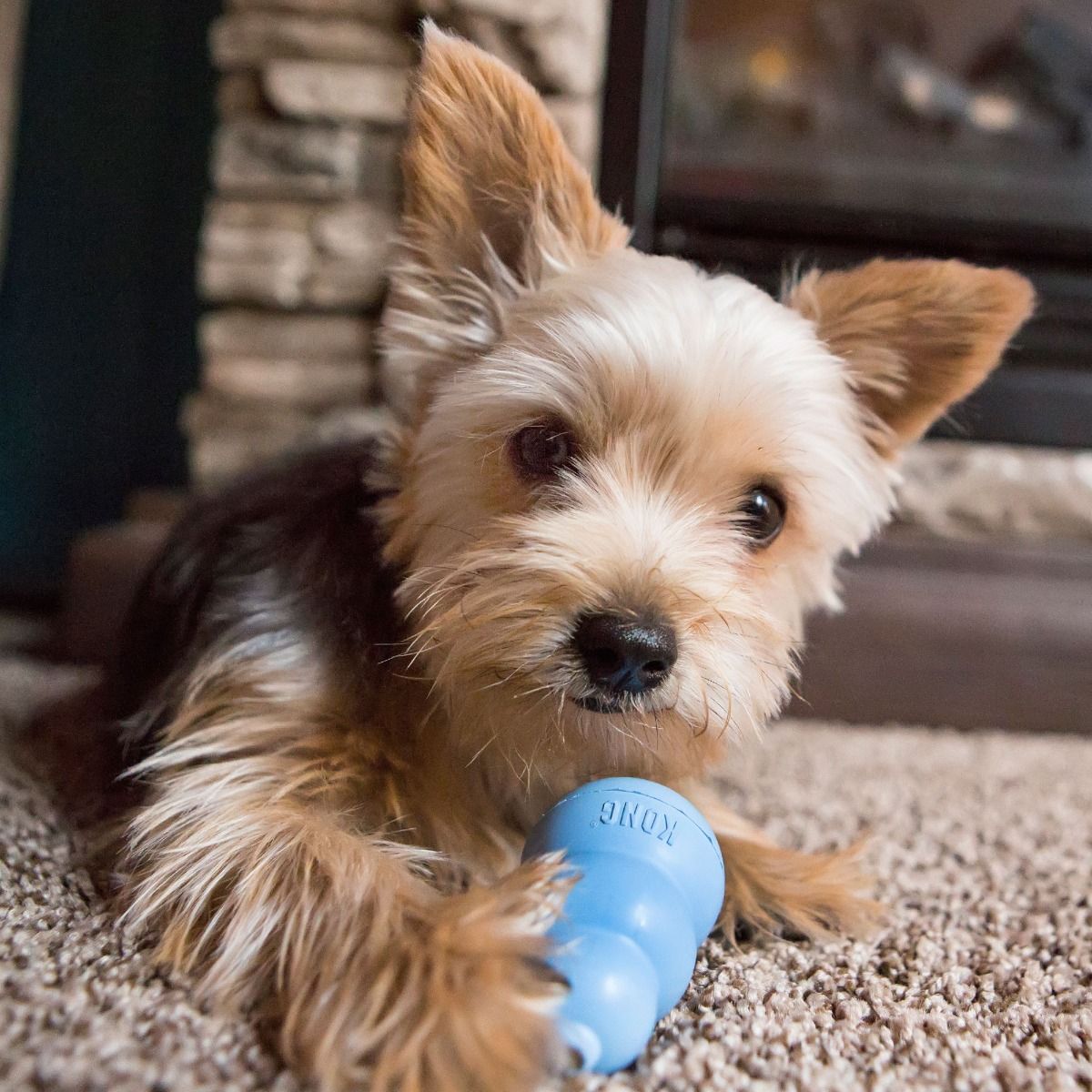
You can also leave dried ears, bully sticks, tripe, horns and similar chews.
Other options include a treat-dispensing ball or rubber toys designed to be filled with treats. However, make sure the toy is safe: your dog must not be able to swallow it, chew it apart or break pieces off. Always watch your puppy with a new toy at first. Only leave them alone with it once you are confident they can use it safely.
TV or radio
When you leave your puppy alone, you can also leave the radio or television on. This may help mask various noises from outside and give them the impression that someone is home, rather than leaving them in complete silence.
Find some help
If you cannot spend enough time at home with your puppy to help them get used to being alone, it is a good idea to ask for help. Think about who could take your puppy outside to toilet or for a walk, and perhaps play with them a little. A professional dog walker? A family member? Could you come home yourself during your lunch break? Perhaps a caring neighbour or friend?
Before leaving home, make sure your puppy has had some activity.
If necessary, get up earlier and take them for a walk, play together or do a short session of obedience training and tricks. Tired paws and a busy brain will find it easier to settle calmly while home alone.
The benefits of getting used to being alone
A dog who has not learned to feel calm and relaxed at home alone may show various behavioural problems. For example, they may invent their own entertainment to relieve boredom and chew or destroy things. They may develop separation anxiety, which is very stressful for them (and for us). They may bark, howl, or even urinate or defecate indoors.
On the other hand, when we teach a puppy that pleasant things happen when we leave, we help them become braver and more relaxed. They will find it easier to cope with situations in which they are not the centre of attention. Even learning to spend time alone in another room while we are at home can help: they will no longer associate every departure with something unpleasant, because they already know what it feels like to be on their own. That makes things much easier for everyone.